


The Role of Material Properties in Dissolution Science
Hourly Schedule
Agenda
- 11:00 am - 11:05 am
- Welcome
-
Speakers:
Vinod P. Shah
- 11:05 am - 11:20 am
- The Role of Material Properties in Dissolution Science
-
Speakers:
Arvind Bansal
- 11:20 am - 12:00 pm
- Exploring in vivo supersaturation
-
Speakers:
Patrick Augustijns
- 12:00 pm - 12:40 pm
- Crystal engineering approaches to modulate solubility
-
Speakers:
Ashwini Kumar Nangia
- 12:40 pm - 01:00 pm
- Panel Discussion. Questions & Answers.
-
Speakers:
Arvind Bansal
Speakers
-
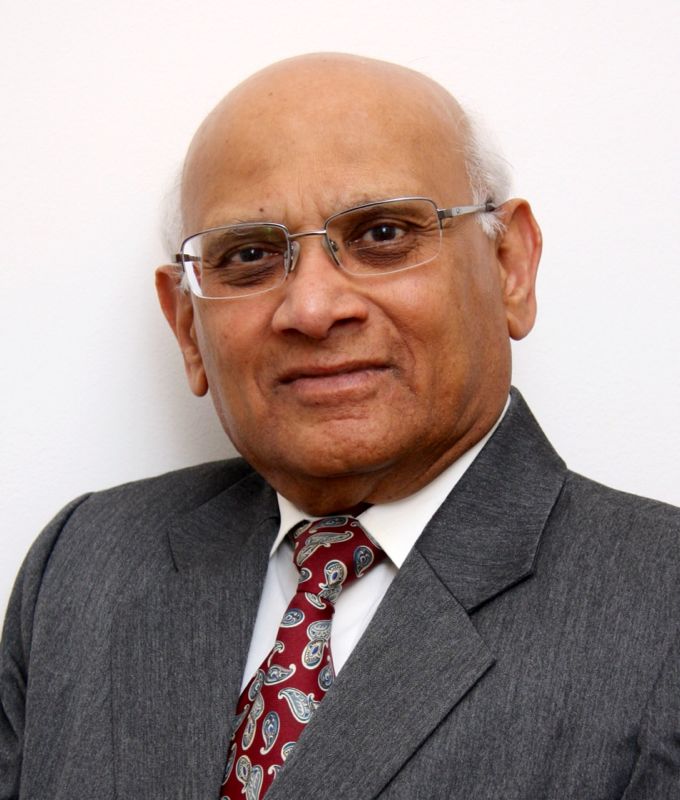
Vinod P. Shah
Dr. Shah is a pharmaceutical consultant. He retired from the US FDA (Food and Drug Administration) after serving for 30 years. While at the FDA, he developed several Regulatory Guidance for the Pharmaceutical Industry in the area of biopharmaceutics, including a guidance on the dissolution of IR and ER products. He is the author/co-author of over 330 scientific papers and co-editor of four books.
Dr. Shah was the President of American Association of Pharmaceutical Scientists (AAPS) in 2003. He is a Fellow of AAPS and FIP. Dr. Shah is a recipient of FDA Award of Merit, FIP Lifetime Achievement Award in Pharmaceutical Sciences; IDMA Eminent Pharmaceutical Analyst Award (India); Honorary Doctorate from Semmelweis University, Budapest, Hungary; Honorary Doctorate from University of Medicine and Pharmacy Carol Davila Bucharest, Romania; SPDS Award of Excellence; AAPS Distinguished Pharmaceutical Scientist Award and AAPS Global Leader Award.
-
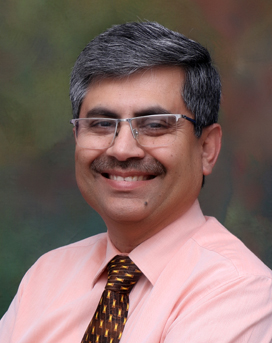
Arvind Bansal
Dr Arvind Kumar Bansal is currently Professor, department of Pharmaceutics at National Institute of Pharmaceutical Education and Research (NIPER) – SAS Nagar, Punjab, India. He earned his M Pharm (Pharmaceutics) (1988) and Ph.D. (1993) from University of Delhi, India. Before joining NIPER, Prof Bansal worked as Senior Scientist and Group Leader in JK Pharmaceuticals and Ranbaxy Research Laboratories, for 8 years. Prof Bansal joined NIPER in 2000 and developed expertise in areas of pre-formulation and formulation development encompassing characterization and stabilization of the amorphous form, polymorphism, pseudo-polymorphism, particle engineering, screening salt forms, improvement of oral bioavailability and lyophilization. His research group works with the mission statement – ‘developing science based industrially viable pharmaceutical technologies’ and works closely with pharmaceutical industry to create opportunities for commercial exploitation of the products. Dr Bansal was conferred prestigious Fellow of American Association of Pharmaceutical Sciences in 2016. He was the first Indian, working in India, to be awarded this Fellow status. He has won prestigious awards like AAiPS Distinguished Educator and Researcher Award, Innocentive Award, OPPI Award and IPA-ACG Scitech Innovation Award 2018 for Best Innovative Development of Solid Dosage Form. Prof Bansal’s research group has completed more than 650 industry-sponsored projects, granted 12 patents, filed 27 patents, and published over 200 research and review articles. He has total citations of >13,200, with h-index of 62, in Google Scholar. He is an editorial board member of ‘Journal of Excipients and Food Chemicals’, ‘Drug Development Research’ and ‘Pharmaceutics’. He is also an Advisor to the editorial board of ‘Journal of Pharmaceutical Science’ and ‘Molecular Pharmaceutics’.
-
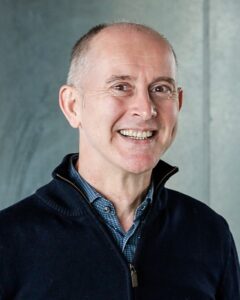
Patrick AugustijnsProfessor at the University of Leuven (Belgium)
Prof. Patrick Augustijns has a Pharmacy degree, a Master in Medical Sciences and a Ph.D. in Pharmaceutical Sciences. Prior to becoming a professor at the University of Leuven (Belgium), he performed postdoctoral research at the University of Kansas and at GSK (North Carolina). In 2003, Patrick Augustijns became chairman of Drug Delivery and Disposition. The laboratory has a strong track record in the biorelevant profiling of intestinal drug absorption, covering all underlying processes including dissolution, precipitation, degradation and permeation. For this purpose, a wide range of simulation models is available, including the in vitro Caco-2 cell culture system, the Ussing chambers system and the in situ intestinal perfusion system. In addition, Drug Delivery and Disposition is able and licensed to perform whole animal absorption and pharmacokinetic experiments. Physiology-based pharmacokinetic modelling is available to extrapolate experimental data to human pharmacokinetics. One of the lab’s major research topics involves the aspiration and in-depth characterization of gastrointestinal fluids, including the evaluation of intraluminal drug and formulation behavior in humans. The latter involves the bio-relevant and predictive evaluation of absorption-enabling strategies, including solubilization and supersaturation of poorly soluble drugs. As age or disease may add an additional layer of (patho)physiological variability, dedicated projects have also been initiated to profile gastrointestinal fluid variability in children, elderly, and patients with Parkinson’s disease. All aspiration and absorption studies are supported by well-developed analytical equipment (LC-UV, -fluo, -MS/MS) to assess the concentrations of endogenous compounds found in the intestinal fluids, as well as of drugs and excipients in biological matrices. Patrick Augustijns is (co)author of ± 350 (peer reviewed) papers in international journals and more than 350 presentations at scientific meetings. Since 2008, Patrick Augustijns is AAPS-fellow. In January 2019, he has been awarded an honorary doctorate from Uppsala University.